
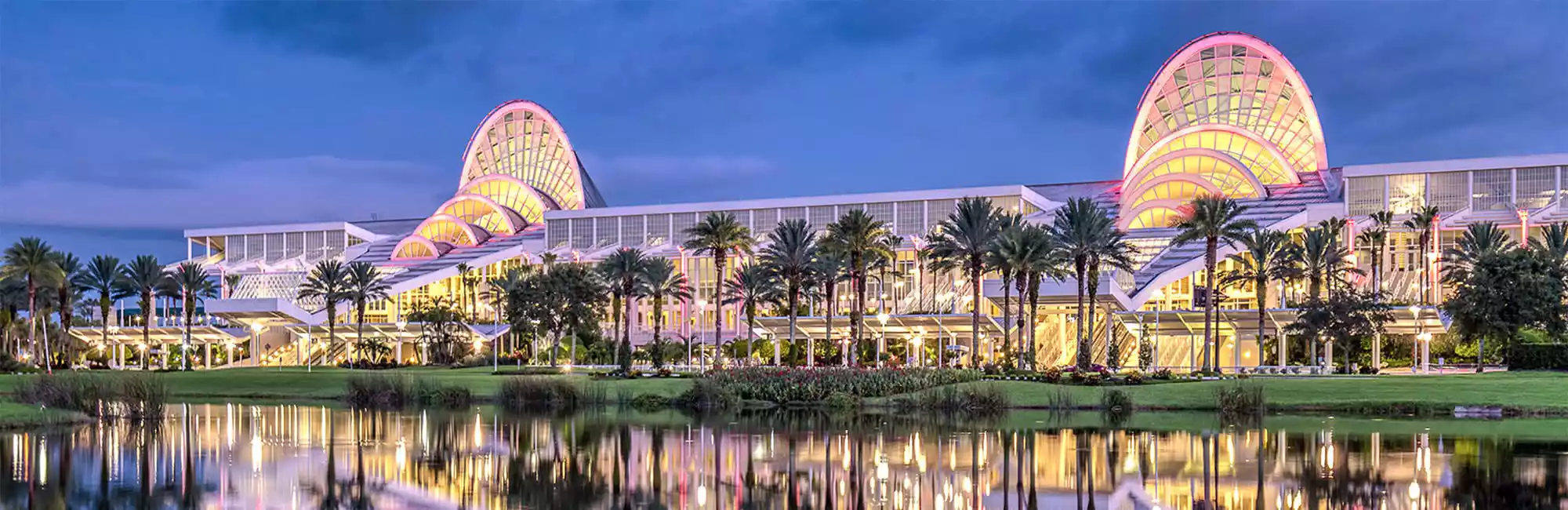
Venue-aware planning for convention halls, hotel ballrooms, resort campuses, and local event spaces.
About
An Orlando exhibit house for work that has to survive the actual floor.
Exhibit House of Orlando is built around practical exhibit planning: match the booth to the venue, protect the schedule, keep vendors aligned, and make the finished space work when attendees are in front of it.
Booth format decisions tied to traffic flow, staffing, storage, graphics, AV, and install time.
Fabrication, rental, logistics, and show-site support treated as one operating plan.
Clear Orlando-specific pages for services, venues, locations, formats, industries, capabilities, and rentals.
What the work actually covers
The work is not just a pretty render. A serious Orlando exhibit needs booth strategy, venue-fit judgment, fabrication or rental decisions, graphics production, freight timing, labor planning, utility coordination, storage, and enough field supervision to keep move-in from becoming chaos.
That is why the site is organized by taxonomy. Buyers can start with the service, venue, location, event type, booth format, industry, capability, or rental path that matches the live project instead of wading through vague agency language.
How projects stay controlled
Projects stay controlled when venue direction, booth format, staffing expectations, graphics timing, freight flow, and approval deadlines are visible before production gets too far. Once those decisions are clear, the job is less likely to be rescued later by overtime labor, rushed print changes, or last-minute storage fixes.
That discipline also helps internal teams. Marketing, operations, sales, and leadership can look at the same plan and see what is fixed, what still needs a decision, and what has to happen before the booth moves into the room.
Why local context matters
Orlando is a layered event market. The Orange County Convention Center, International Drive hotels, Bonnet Creek properties, Lake Nona venues, Downtown Orlando rooms, and suburban overflow locations all create different pressures around access, travel time, attendee behavior, and weekly pacing.
Local context improves venue comparison. The better question is not whether a building is well known. It is whether the property suits the booth, the audience, the schedule, and the amount of operating control the team needs.
What buyers usually need first
Most buyers need a cleaner read on the basics first: venue or target district, event format, booth size, support lanes, and the dates that really matter. Once those are named, rental versus custom, staffing, AV, graphics, freight, and show-site oversight become easier to scope.
A precise opening leads to faster decisions and fewer repeated questions. It also gives the final room a better chance of feeling settled, intentional, and ready for real traffic.
Related Orlando pages