Key Operational Planning Considerations
Reception capacity reaching 15,000 guests for large-scale activations
Banquet service configured for up to 2,200 attendees
Integration of One Ocean killer-whale production into event flow
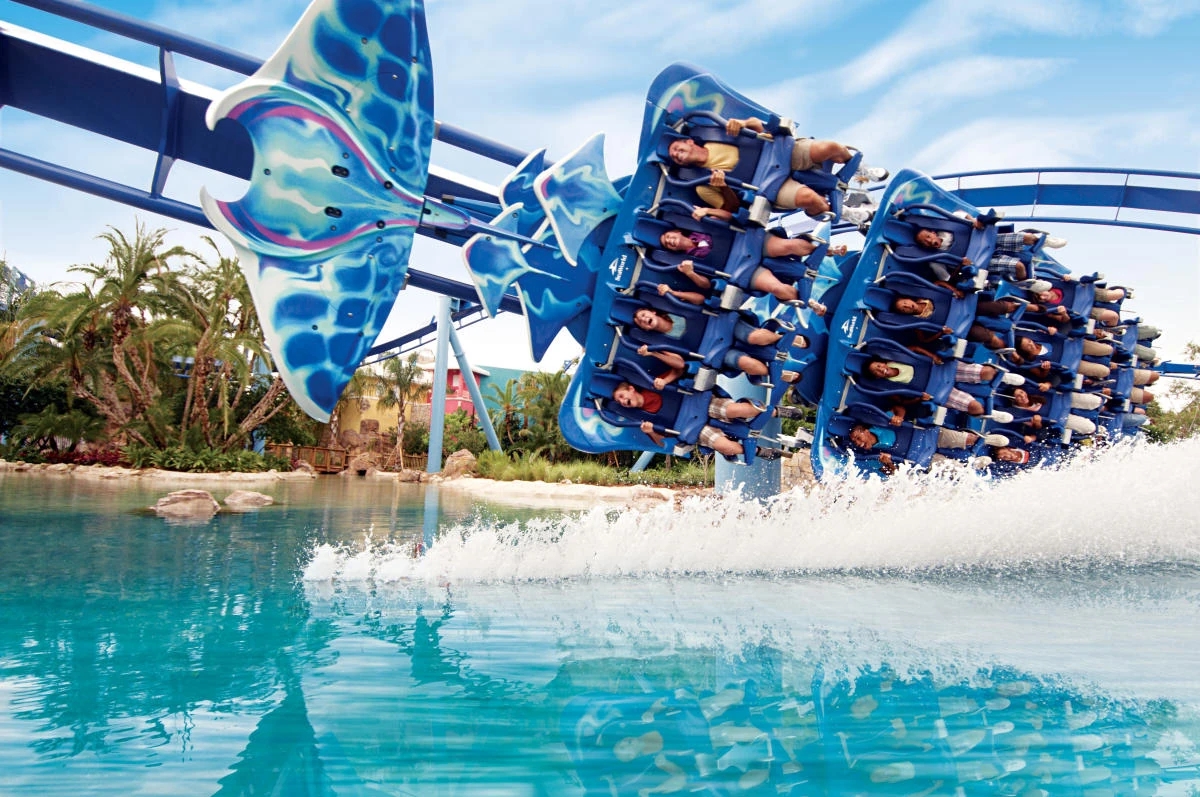
Thematic layering using MAKO, Manta, and Kraken Unleashed attractions
Incorporation of SeaWorld Rescue manatee rehabilitation narratives
Show-specific labor protocols within Florida’s Right to Work market
District alignment inside the I-Drive and SeaWorld convention cluster
Venue Overview for Strategic Event Coordination
SeaWorld Orlando functions as a special-event venue that immerses attendees in marine-world narratives at a scale suitable for both intimate corporate functions and expansive receptions. The property’s core identity rests on authentic animal interactions, educational programming, and high-energy attractions that planners can sequence into pre-function, main-stage, and post-event segments. Rather than standard convention-hall aesthetics, coordinators gain access to environments where predator exhibits, rescue stories, and live presentations become extensions of the attendee journey.
This differentiation proves particularly relevant inside the I-Drive / Convention District, where the venue sits alongside the Orange County Convention Center’s 2,053,820 square feet of exhibit space and 7,000,000 square feet of total meeting and event space. Event flows can therefore transition between large-scale trade-show activity at the OCCC and more experiential programming at SeaWorld Orlando without leaving the primary western Orlando corridor. The current Grand Concourse Expansion at the convention center further reinforces the infrastructure supporting multi-venue events that include this themed destination.
Coordination begins with mapping attendee movement across the venue’s distinct zones while preserving the operational integrity of animal-care schedules and show timetables. Planners treat the property as a living ecosystem in which conservation messaging can reinforce corporate sustainability goals or product narratives centered on innovation and stewardship.
The venue’s official listing through the Orlando Meetings & Conventions platform confirms its role as a recognized off-site option for groups seeking memorable alternatives to hotel ballrooms or pure exhibit halls.
Signature One Ocean production featuring killer whales
MAKO as Orlando’s tallest, fastest, longest coaster
Kraken Unleashed virtual-reality coaster experience
Manta ride and up-close animal interaction zones
SeaWorld Rescue manatee rehabilitation program
Documented Capacities and Configuration Parameters
Verified metrics for SeaWorld Orlando list banquet capacity at 2,200 and reception capacity at 15,000, establishing clear upper thresholds for catered events and standing-room activations. These figures allow coordinators to model floor plans that incorporate both formal dining and open-area networking while maintaining required circulation paths around animal habitats and show arenas.
Unlike venues with published breakout-room counts or fixed classroom capacities, SeaWorld Orlando’s flexibility derives from its open-air and pavilion-style spaces that can be adapted for exhibit displays, interactive stations, or sponsor villages. Planners must therefore prioritize sight-line studies that account for permanent attractions and scheduled presentations rather than modular wall systems alone.
When aligning with larger Orlando conventions, these capacities support overflow programming, exclusive evening events, or incentive functions that complement daytime activity at the Orange County Convention Center’s 74 meeting rooms and multiple assembly areas. The absence of listed sleeping rooms on-site directs coordinators toward the dense hotel inventory throughout the I-Drive corridor and adjacent Rosen properties.
Capacity planning also includes contingency routing for weather-dependent outdoor zones, ensuring that indoor alternatives exist for the full 15,000-reception scenario without compromising thematic integrity.
District Context Within Orlando Meetings Infrastructure
SeaWorld Orlando occupies a strategic node inside the I-Drive / Convention District cluster that encompasses International Drive, the Dr. Phillips area, and the SeaWorld corridor. This cluster is led by the Orange County Convention Center and supported by major convention hotels including the Hyatt Regency Orlando, Hilton Orlando, Rosen Shingle Creek, Rosen Centre, and Rosen Plaza. The district’s infrastructure supports efficient attendee movement between themed experiences and traditional exhibit halls.
In contrast to the Disney / Bonnet Creek / Lake Buena Vista cluster—focused on large resort inventories and ballroom product—SeaWorld Orlando delivers marine-specific differentiation that appeals to associations in conservation, education, or family-oriented verticals. Coordinators can therefore route portions of their program to this venue when thematic relevance outweighs pure proximity to Disney-area hotels.
The broader Orlando meetings economy, promoted as the number-one meeting destination by Visit Orlando, benefits from this multi-cluster approach. Secondary clusters in Lake Nona, Sanford, and Winter Garden provide overflow options, yet the core convention demand remains concentrated in the I-Drive and SeaWorld zone where this venue operates.
Planners reference the official Orlando Meetings & Conventions platform to map these relationships and confirm how SeaWorld Orlando fits into larger city-wide calendars without assuming direct operational linkages.
I-Drive / Convention District primary cluster
Adjacency to OCCC’s 2.1 million square feet of exhibition space
Differentiation from Bonnet Creek resort conference product
Support for multi-day conference traffic and activations
Labor Environment and Service Coordination Protocols
Florida’s status as a Right to Work state creates an open-market labor environment across Orlando venues, including special-event properties such as SeaWorld Orlando. This framework allows exhibitors and organizers to engage labor through the show’s designated service contractor or approved exhibitor-appointed contractors, subject to each event’s published exhibitor kit and technical guidelines.
At neighboring facilities like the Orange County Convention Center, certain technical services such as utilities and aerial rigging are ordered directly through the venue. While SeaWorld Orlando maintains its own house policies, coordinators must review the specific show manual to determine which services remain exclusive and which permit outside coordination. Public venue listings do not publish exhaustive labor manuals, requiring direct confirmation with the event organizer well in advance of move-in.
This show-specific approach prevents blanket assumptions about union status or labor access. Instead, planning resources emphasize early review of the event’s service order forms, badge protocols, and jurisdictional rules to maintain compliance and schedule efficiency. The mixed labor market supports competitive bidding while protecting venue standards for animal safety and guest experience.
Coordinators therefore build labor timelines that include buffer days for orientation, safety briefings, and any specialized training required for work near habitats or show rigging.
Thematic Integration and Experiential Programming
The venue’s strength lies in its ability to layer educational and entertainment elements into corporate programming. The One Ocean production offers a large-scale narrative platform that can frame keynote sessions or award ceremonies with themes of teamwork, conservation, and performance. Similarly, guided interactions through the SeaWorld Rescue manatee rehabilitation program allow sponsors to demonstrate real-world impact in alignment with brand values.
Thrill attractions including MAKO—the tallest, fastest, and longest coaster in Orlando—Kraken Unleashed virtual-reality experience, and the Manta ride create natural breakpoints for team-building or client entertainment. Planners sequence these assets to avoid peak public hours, ensuring controlled environments for private groups while preserving the venue’s daily operational calendar.
Exhibit and activation design must therefore account for sight lines to animal viewing areas, sound bleed from shows, and pedestrian flow between coasters and dining pavilions. This level of venue specificity distinguishes SeaWorld Orlando from standard convention-center or hotel properties and rewards coordinators who map attendee journeys against the permanent infrastructure.
Successful programs treat the marine environment as a living backdrop rather than decorative scenery, creating measurable differentiation that supports recall and engagement metrics long after the event concludes.
One Ocean as signature evening entertainment option
Manatee rescue program for educational sponsorships
Coaster experiences for targeted attendee segments
Conservation messaging aligned with corporate responsibility
Logistical Framework for Move-In, Execution, and Move-Out
Coordinating large events at SeaWorld Orlando requires precise scheduling that respects both attendee experience and the venue’s animal-care and show calendars. Move-in sequences typically prioritize installation of temporary structures in non-habitat zones first, followed by technology and theming that can be completed within compressed windows between public operating hours.
Execution planning centers on crowd management around permanent attractions and integration of private showings of One Ocean or other presentations. Coordinators model peak occupancy against the 15,000-reception ceiling while maintaining clear egress paths and emergency-access lanes required by the property’s safety protocols.
Move-out must occur rapidly to restore the venue for next-day operations, placing emphasis on modular components and pre-planned dismantling crews familiar with the site’s layout. Early engagement with the event’s designated service contractor ensures alignment on rigging points, power distribution, and waste-removal procedures without disrupting marine-life schedules.
Throughout the process, reference to the official Orlando Meetings & Conventions resources helps place SeaWorld Orlando within the larger ecosystem that includes the OCCC’s three covered loading docks, 173 truck bays, and on-site parking for over 6,000 vehicles.
Alignment with City-Wide Meetings Demand Drivers
Orlando’s position as a leading meetings destination, supported by Visit Orlando and the Orange County Convention Center’s ongoing expansions, creates sustained demand for distinctive venues like SeaWorld Orlando. The property’s reception and banquet capacities allow it to absorb overflow from the OCCC’s two 92,000 Square Foot general assembly areas or its new Tangerine Ballroom while delivering an experience unavailable in standard exhibit halls.
Planners reference the city’s cluster strategy—balancing I-Drive convention density with Disney-area resort product and northern airport-adjacent options—to determine optimal routing. SeaWorld Orlando’s marine focus appeals to verticals underserved by traditional hotels, enabling associations and corporations to create differentiated agendas that combine business sessions with high-impact experiential components.
The Right to Work labor environment across Orange, Osceola, Seminole, and Lake counties further supports flexible resourcing models that adapt to each show’s scale. By treating the venue as one calibrated piece of the larger Orlando meetings infrastructure, coordinators maximize both operational efficiency and attendee satisfaction.
Continued monitoring of official sources such as orlandomeeting.com ensures that planning reflects current infrastructure developments including the Grand Concourse Expansion and evolving service offerings across the district.
Support for OCCC overflow and evening activations
Thematic fit for conservation and education sectors
Integration with multi-cluster routing strategies
Leverage of Right to Work labor flexibility
FAQ
How early should SeaWorld® Orlando planning begin?
The earlier the team can confirm dates, venue direction, booth format, and the main services involved, the better the decisions tend to be. Early planning gives more room to align graphics, freight, labor, utilities, storage, and approvals before the calendar starts forcing rushed tradeoffs that weaken the booth or raise cost.
What details make the first call more useful?
Show date, venue or target district, booth size, event format, staffing expectations, product or demo needs, and the biggest open questions usually provide enough to turn a broad inquiry into a practical Orlando planning conversation. That level of detail helps the team focus on the decisions that actually affect the floor outcome.
How do venue rules affect the final plan?
SeaWorld® Orlando still has to be checked against the live event manual, current utility requirements, exhibitor paperwork, and any organizer-specific deadlines before labor, AV, freight, or install assumptions are treated as final. Those rules shape labor timing, power and internet orders, material handling, access windows, and how the booth should be staged once move-in begins.
What usually improves the outcome most?
Clear ownership, early venue coordination, realistic freight planning, disciplined graphics production, and enough show-site supervision to keep the booth aligned with the original plan usually do more to protect the final result than any single decorative upgrade.