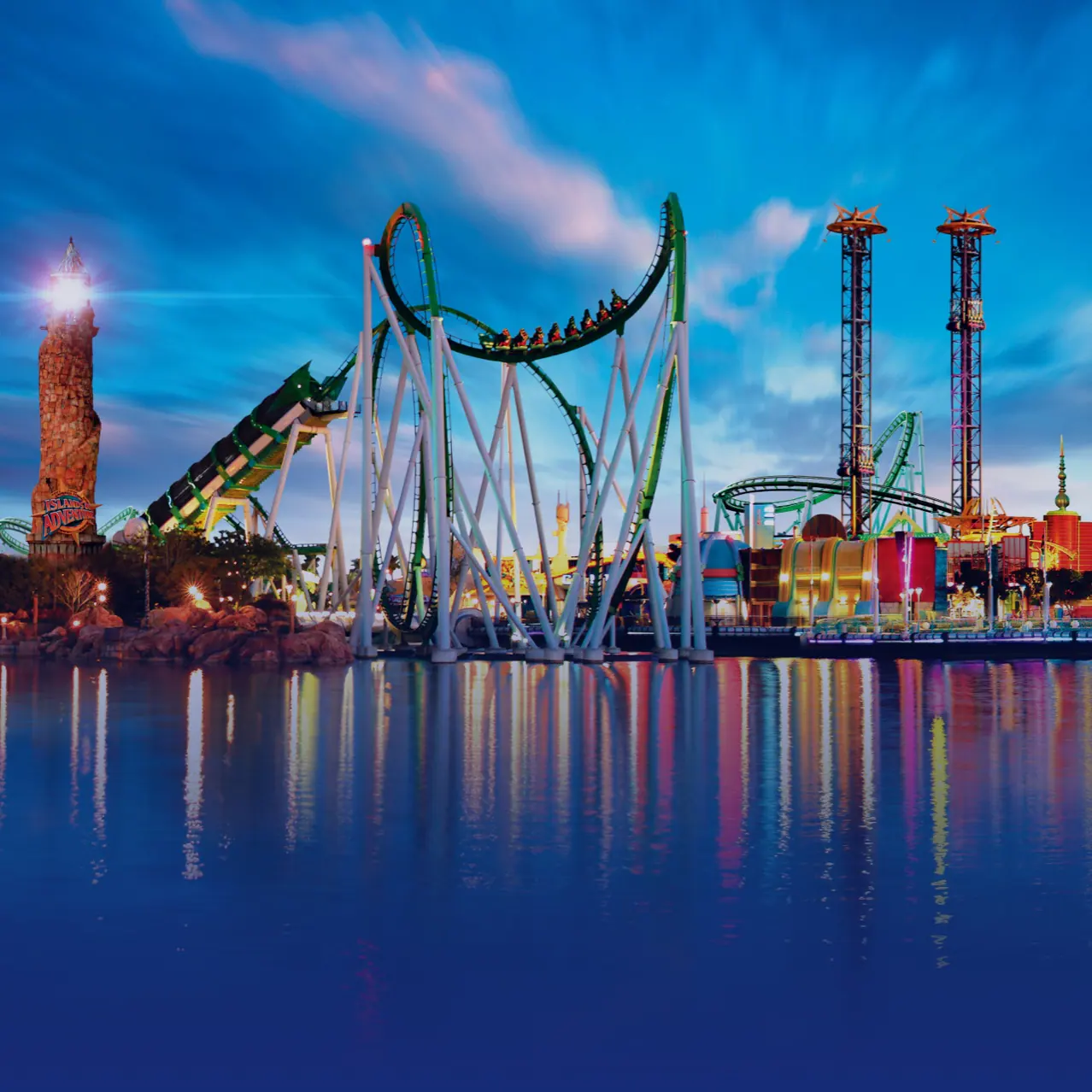
Core Coordination Considerations for Universal Islands of Adventure
Scheduling exclusive access across uniquely-themed islands
Integrating cutting-edge rides and live shows into event timelines
Aligning award-winning culinary services with attraction flow
Applying Florida Right to Work labor guidelines per event manual
Connecting with adjacent Universal Orlando Meetings & Events resources
Routing within the I-Drive and convention district ecosystem
Managing operational transitions and contingency planning
Strategic Location Within Orlando's Universal Area and Convention Clusters
The address at 6000 Universal Boulevard places Universal Islands of Adventure squarely in the Universal Area, a key node that connects efficiently with the primary I-Drive and Convention District cluster. This district includes the Orange County Convention Center with its 2,053,820 square feet of exhibit space and 74 meeting rooms, allowing planners to design programs that combine structured daytime sessions at the OCCC with experiential components at the theme park venue. Proximity supports streamlined attendee movement, reducing transit times that often complicate multi-property agendas in a destination known for its expansive resort inventory.
Orlando's meetings infrastructure spans several defined clusters, from Disney and Bonnet Creek properties to Lake Nona and the western growth corridor. Universal Islands of Adventure serves as a specialized resource within this network, particularly valuable when events require narrative-driven environments rather than traditional ballrooms. Coordination involves mapping these connections against the official Orlando Meetings & Conventions framework, ensuring that transportation, scheduling, and attendee communication reinforce smooth transitions between business-focused venues and immersive attractions.
Planners reference Visit Orlando resources to understand calendar overlaps and infrastructure capabilities, such as the convention center's current Grand Concourse Expansion and its 2.1 million square feet of total meeting and event space. This context informs decisions about whether to anchor a program at a core convention hotel like the Rosen Centre or Hyatt Regency Orlando before routing participants to Universal for specialized segments. The approach prioritizes operational efficiency over generic tourism appeals, focusing on how district-level differentiation enhances overall program outcomes.
Universal Area adjacency to International Drive corridor
Integration pathways with OCCC exhibit and meeting space
Multi-cluster routing across Disney, Lake Nona, and I-Drive nodes
Calendar synchronization with official meetings destination resources
Transportation planning between supporting hotel inventory and attractions
Designing Immersive Experiences Through Themed Islands and Attractions
At the core of event planning for Universal Islands of Adventure lies the opportunity to provide exclusive access to its collection of uniquely-themed islands. Attendees engage directly with cutting-edge rides and shows that transform familiar stories into interactive, jaw-dropping realities. Effective coordination requires detailed mapping of attendee pathways so that the sequence of experiences supports specific objectives, whether building excitement for a product reveal or fostering team cohesion through shared adventure.
Planners treat the venue's narrative infrastructure as a programmable asset, selecting islands and attractions whose thematic elements align with corporate storytelling needs. This process involves careful timing to balance high-intensity ride segments with moments for reflection or discussion, preventing fatigue while maximizing memorability. The vivid action inherent in these attractions creates natural breakpoints that can be leveraged for messaging reinforcement or informal networking within the themed environments.
Operational detail extends to managing flow during periods of exclusive access, accounting for throughput variations across different shows and rides. Coordination frameworks emphasize contingency protocols for technical interruptions or weather impacts common in Central Florida, ensuring the program maintains momentum. By focusing on these nuances rather than surface-level descriptions, planners differentiate Universal Islands of Adventure from standard off-site venues, creating differentiated experiences that elevate entire Orlando conventions.
Thematic alignment between attractions and event objectives
Pathway sequencing across multiple islands
Timing calibration for ride and show throughput
Integration of narrative elements into corporate programming
Contingency development for operational variables
Culinary Coordination with Award-Winning Teams and Themed Dining
The award-winning culinary team at Universal Islands of Adventure supplies a critical component for event success, offering a delectable variety of dining options that harmonize with the surrounding attractions. Planning centers on synchronizing meal services with attraction schedules so that dining enhances rather than competes with the immersive environment. This may involve themed menus that reference specific islands or interactive stations positioned to maintain narrative flow throughout the day.
Diverse dietary requirements typical of large corporate groups receive particular attention, with coordination ensuring that options remain consistent with the venue's quality standards. Whether configuring formal seated events or more fluid reception-style service, the focus remains on operational precision that prevents bottlenecks near key attractions. These elements allow planners to treat dining as an integrated experience rather than a separate logistical task.
In the context of Orlando's broader meetings market, such culinary flexibility distinguishes special event venues from standard hotel ballrooms. Coordination resources stress early menu development aligned with overall program themes, leveraging the venue's capabilities to create memorable touchpoints. This approach contributes to higher attendee satisfaction scores frequently reported for programs that successfully blend adventure with hospitality.
Synchronization of dining with attraction timelines
Thematic menu customization per island context
Dietary and preference accommodation protocols
Reception versus seated service decision frameworks
Quality alignment with overall event standards
Labor Environment, EAC Guidelines, and Service Coordination
Florida functions as a Right to Work state, establishing an open-market labor environment that offers flexibility for organizers of events at special venues like Universal Islands of Adventure. However, specific rules for each program must be verified through the event's service manual and exhibitor kit, as no universal union mandate applies across all properties. This reality requires planners to engage early with designated contractors to clarify responsibilities for technical services, utilities, or any exhibit-related installations.
Exhibitor-appointed contractors (EACs) operate under conditions established for individual events, similar to the formal guidelines published by the nearby Orange County Convention Center for its exhibitors. Certain services may require direct venue ordering, particularly those involving specialized infrastructure within the themed setting. Coordination best practices include thorough review of these parameters before move-in to prevent compliance issues during high-visibility activations.
The planning resource role involves translating these labor dynamics into actionable timelines that account for setup, operation, and teardown within the park's operational windows. By maintaining focus on verification rather than assumption, coordinators ensure programs adhere to all applicable regulations while capitalizing on the market's flexible labor structure. This measured approach supports successful integration of any custom elements without disrupting the guest experience.
Documentation of labor assignments and contractor scopes forms an essential part of pre-event preparation, particularly when events span both convention facilities and theme park venues. Reference to official Orlando Meetings resources helps contextualize these requirements within the destination's overall ecosystem.
Verification of event-specific service manuals
Right-to-work state labor market characteristics
EAC policy confirmation per program
Direct ordering protocols for technical services
Timeline development for compliant move-in and move-out
Integration of labor considerations with attraction schedules
Logistical Frameworks for Operational Success
Successful events at Universal Islands of Adventure depend on meticulous logistical coordination that respects the venue's unique operational rhythms. Planners develop comprehensive timelines addressing transportation between islands, crowd management during exclusive periods, and alignment with the property's standard visitor patterns. The contact number (407) 363-8000 provides an entry point for gathering current operational data during initial planning phases.
Contingency planning receives significant emphasis given Central Florida's climate variables and the venue's outdoor components. Coordination includes backup indoor alternatives where available and communication protocols that keep attendees informed without diminishing the immersive quality. These details differentiate professional planning from ad-hoc arrangements, particularly for groups transitioning from daytime sessions at the Rosen Shingle Creek or Hilton Orlando.
Broader connectivity to Orlando's meetings infrastructure allows for hybrid models where exhibit time at the convention center pairs with evening events at Universal Islands of Adventure. Planners reference the destination's established resources, including those from Visit Orlando, to optimize routing and minimize downtime. This systems-level thinking ensures that the venue's strengths in storytelling and action-oriented experiences receive proper support through reliable operations.
Development of Island to Island transportation plans
Weather and operational contingency protocols
Timeline synchronization with park hours
Communication strategies for attendee groups
Integration with multi-venue Orlando itineraries
Connecting with Universal Orlando Meetings & Events Resources
Universal Orlando Meetings & Events maintains an active LinkedIn presence where planners can access updates, case studies, and ideas for hosting spectacular events at the resort. This channel complements official destination platforms by providing venue-specific insights that inform coordination strategies. Following these resources helps identify emerging opportunities for private access or custom programming that align with current operational capabilities.
Within the larger Orlando meetings ecosystem, this venue adds a layer of experiential differentiation that enhances programs centered at the Orange County Convention Center or supporting hotels like the Caribe Royale Orlando and Signia by Hilton Orlando Bonnet Creek. Coordination involves leveraging these connections to create multi-day agendas that balance structured content with high-adrenaline components, maximizing the destination's recognized status as a top meetings location.
Planners utilize available planning tools to map program elements against both venue constraints and attendee expectations. The emphasis remains on data-driven decisions that respect the distinct operational profiles of each participating property while delivering cohesive experiences. This resource-oriented approach ensures programs capitalize on Universal Islands of Adventure's strengths without overextending logistical capabilities.
Monitoring LinkedIn for planning updates
Integration with Visit Orlando meetings resources
Hybrid program development with OCCC and hotels
Alignment of experiential elements with business objectives
Utilization of destination-wide planning frameworks
Measuring Impact and Refining Future Coordination Strategies
Post-event evaluation at venues like Universal Islands of Adventure focuses on both quantitative metrics and qualitative feedback regarding the effectiveness of immersive elements. Planners develop assessment frameworks that capture how exclusive attraction access and culinary integration contributed to overall objectives, informing refinements for subsequent programs. This iterative process strengthens coordination capabilities across Orlando's diverse venue portfolio.
Data gathered from these evaluations often highlights the venue's capacity to create emotional connections that traditional exhibit halls cannot replicate. By documenting operational successes and challenges, particularly around labor coordination and timing, planners build institutional knowledge that benefits future events in the Right to Work environment. The goal remains continuous improvement in how experiential venues complement the core convention infrastructure of the Orange County Convention Center and surrounding properties.
Long-term coordination strategies incorporate these insights to optimize budget allocation, scheduling precision, and partner selection. The result is increasingly sophisticated programming that leverages Universal Islands of Adventure's unique attributes while maintaining operational discipline across all event components.
Development of experience-specific evaluation metrics
Documentation of logistical lessons learned
Integration of feedback into future planning cycles
Comparative analysis with other Orlando venue types
Continuous refinement of coordination playbooks
FAQ
How early should Universal Islands of Adventure planning begin?
The earlier the team can confirm dates, venue direction, booth format, and the main services involved, the better the decisions tend to be. Early planning gives more room to align graphics, freight, labor, utilities, storage, and approvals before the calendar starts forcing rushed tradeoffs that weaken the booth or raise cost.
What details make the first call more useful?
Show date, venue or target district, booth size, event format, staffing expectations, product or demo needs, and the biggest open questions usually provide enough to turn a broad inquiry into a practical Orlando planning conversation. That level of detail helps the team focus on the decisions that actually affect the floor outcome.
How do venue rules affect the final plan?
Universal Islands of Adventure still has to be checked against the live event manual, current utility requirements, exhibitor paperwork, and any organizer-specific deadlines before labor, AV, freight, or install assumptions are treated as final. Those rules shape labor timing, power and internet orders, material handling, access windows, and how the booth should be staged once move-in begins.
What usually improves the outcome most?
Clear ownership, early venue coordination, realistic freight planning, disciplined graphics production, and enough show-site supervision to keep the booth aligned with the original plan usually do more to protect the final result than any single decorative upgrade.