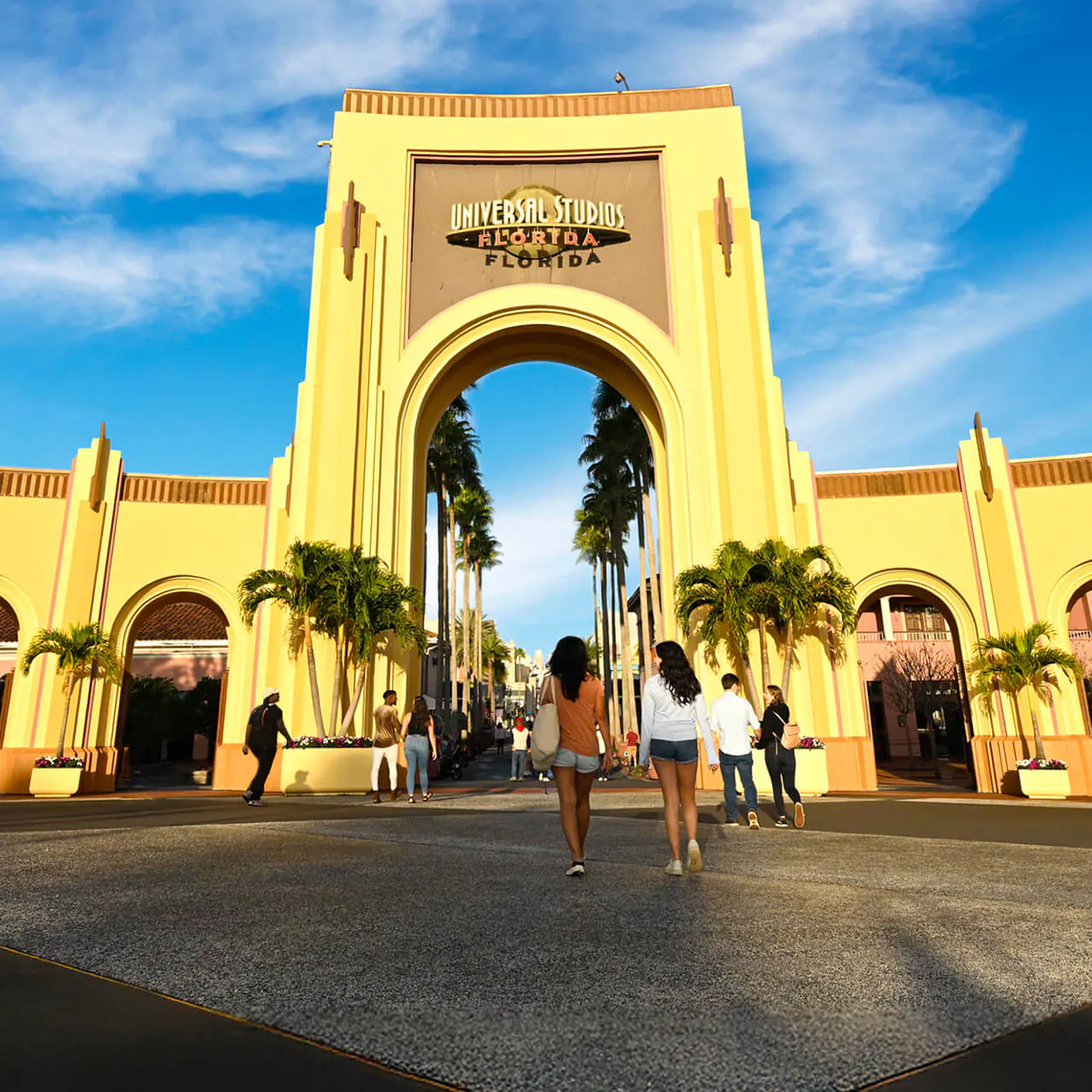
Essential Planning Elements for Universal Studios Florida Events
Integration of brand narratives with existing street sets and built-in decor
Selection and coordination of themed dining to support event storytelling
Management of attendee immersion within active theme park environments
Alignment of event schedules with Universal Orlando operational windows
Transition planning between core convention activities and themed experiences
Verification of show-specific labor and service rules per event manual
Development of activation concepts that leverage cinematic production value
Understanding the Blockbuster Potential of Theme Park Settings
The foundational strength of Universal Studios Florida lies in its capacity to elevate events through environments directly drawn from film and television heritage. Official descriptions highlight how the venue sets the stage for incredible events by deploying its magnificent street sets that feature built-in decor, eliminating the need for extensive custom construction while still delivering high production impact. Themed dining options further reinforce narrative coherence, allowing smooth transitions from presentations to meals that maintain the immersive quality throughout the program.
This configuration proves particularly effective for product launches, leadership summits, and incentive programs where the goal extends beyond information transfer to creating lasting emotional connections. Attendees are positioned as central figures within the experience, an outcome that aligns with modern expectations for experiential marketing. Within the context of Orlando's meetings economy, this venue provides a counterpoint to the functional exhibit halls and ballrooms found at properties like the Rosen Centre Hotel or Caribe Royale Orlando, offering instead a living set that enhances rather than competes with branded messaging.
Successful utilization depends on early mapping of intended zones against the park's natural traffic patterns and operational rhythms. Planners must account for how street sets can accommodate both static displays and dynamic interactions without compromising safety or guest experience standards maintained by the venue. This level of detail separates effective activations from those that merely occupy space within a famous location.
Built-in decor reduces custom fabrication requirements while maintaining visual impact
Themed dining creates narrative continuity across the entire event timeline
Star treatment for attendees differentiates this venue from standard hospitality options
District Context and Differentiation in the Universal Area
The Universal Area occupies a distinctive position within Orlando's segmented meetings landscape, situated along Universal Boulevard in close proximity to the I-Drive convention cluster yet functionally differentiated by its entertainment core. While the primary convention district centered on the Orange County Convention Center delivers 7,000,000 square feet of total meeting and event space including multiple dedicated assembly areas, Universal Studios Florida contributes irreplaceable thematic variety that supports multi-day programs requiring both structured sessions and high-impact social components.
This differentiation becomes strategic when coordinating larger citywide events that leverage the OCCC for daytime exhibition and breakout activity before transitioning participants to the Universal Area for evening programming. The venue's movie and television foundation allows brands to create moments of recognition and delight that reinforce key messages in ways traditional hotel ballrooms cannot achieve. Nearby properties in the Disney/Bonnet Creek and Lake Buena Vista clusters offer resort-style amenities, but Universal Studios Florida uniquely delivers large-scale, built-in production elements that align with activation objectives.
Operational planning must therefore consider inter-venue transportation, timing buffers, and attendee expectations when designing hybrid programs. The Universal Area's concentration of entertainment infrastructure supports efficient routing compared to more dispersed suburban options in Lake Nona or Winter Garden, creating logistical advantages for planners managing complex attendee journeys across Orlando's diverse venue inventory.
Recognition of these district-level distinctions enables more sophisticated event architecture that maximizes the strengths of each location rather than treating all venues as interchangeable. Universal Studios Florida performs best when its cinematic identity is positioned as the emotional centerpiece rather than a generic backdrop.
Logistical Frameworks for Move-In, Activation, and Move-Out
Effective coordination at Universal Studios Florida requires meticulous attention to logistical sequencing given the venue's dual role as both operating theme park and event destination. Move-in and move-out windows must be negotiated against daily park operations, with particular focus on protecting existing street sets and decor that form the foundation of the guest experience. This constraint differentiates it from dedicated convention facilities like the Orange County Convention Center, which features 173 truck bays and three covered loading docks optimized for frequent exhibit turnover.
Activation planning benefits from the venue's inherent production capability, yet still demands clear mapping of power requirements, structural load limits on sets, and pathways for materials handling that avoid interference with public areas. Themed zones require careful segmentation to maintain both event integrity and overall park flow, creating operational complexity that rewards advance modeling and contingency development. Coordination with the designated event services team becomes essential for identifying approved pathways and timing parameters.
Post-event move-out follows similarly compressed timelines to restore the venue for regular operations, underscoring the importance of disciplined scheduling and experienced supervision. These considerations extend beyond simple transportation to encompass waste management, temporary infrastructure removal, and documentation that satisfies both event and park requirements. When integrated with larger Orlando programs, these logistics must further synchronize with adjacent venue schedules at properties such as the Hilton Orlando or Rosen Shingle Creek to prevent cascading delays.
The most successful activations treat these logistical elements as design constraints that, when properly addressed, enhance rather than limit creative possibilities within the theme park context.
Schedule activations during approved access windows to align with park operations
Map material pathways that preserve existing street sets and decor elements
Develop contingency protocols for weather-related adjustments in outdoor zones
Coordinate multi-venue timing when combining with OCCC or hotel programs
Labor Environment and Service Coordination Guidelines
Florida operates as a Right to Work state, establishing a foundational open-market labor environment that applies across Orlando venues including special event properties like Universal Studios Florida. This framework supports flexibility in service provider selection while requiring explicit confirmation of each event's specific labor parameters through the official service manual and show organizer directives. Public documentation for similar venues indicates that certain technical services may be handled directly by the property while others remain open to exhibitor-appointed contractors, making early review non-negotiable.
Unlike the formalized exhibitor and EAC conditions published by the Orange County Convention Center for utility and rigging services, special event venues typically present requirements within individual event kits that reflect the unique operational demands of theme park environments. Planners should anticipate show-specific rules that address both skilled labor for technical installations and general support staff for attendee management across the various street sets and dining locations.
This mixed labor market encourages thorough vetting of all providers against the event's documented policies rather than relying on generalized market assumptions. Coordination resources focus on facilitating compliance by identifying verification steps and documentation requirements that maintain operational smoothness. The absence of verified venue-wide union mandates in available public materials for special event properties reinforces the need for Event by Event confirmation.
Successful labor planning at Universal Studios Florida therefore centers on integration with the designated meetings and events team to secure accurate, current guidance that aligns with both the production elements and the overall attendee experience objectives.
Developing Immersive Experiences Using Venue Assets
The true competitive advantage of Universal Studios Florida emerges when planners fully leverage its movie and TV heritage to craft experiences that transcend typical corporate events. Magnificent street sets provide ready-made environments that can be selectively enhanced rather than built from scratch, allowing brands to insert their narratives into recognizable contexts that immediately resonate with attendees. Themed dining options extend this immersion into refreshment breaks and formal meals, creating comprehensive storytelling arcs that reinforce key messages throughout the day or evening.
Making attendees feel like stars requires deliberate choreography that positions participants as active elements within the production rather than passive observers. This might involve guided interactions with sets, carefully timed reveals, or personalized moments that utilize the venue's inherent theatricality. Such approaches prove especially powerful for product introductions or recognition programs where emotional impact drives measurable outcomes in engagement and recall.
Integration with Universal Orlando Meetings & Events resources, including their LinkedIn presence for ongoing updates and ideas, supports development of these concepts while maintaining operational feasibility. The planning process benefits from early alignment on which elements of the park's infrastructure best serve specific objectives, avoiding overextension that could compromise either the event or the venue's standard operations.
When executed with precision, these immersive strategies position Universal Studios Florida as more than a venue choice but as a strategic communications platform capable of delivering memorable differentiation within Orlando's extensive meetings inventory.
Map brand elements to specific street sets for contextual relevance
Incorporate themed dining as narrative chapters rather than simple meal functions
Design attendee journeys that maximize star treatment across multiple zones
Balance spectacle with opportunities for meaningful brand interaction
Integration Strategies for Multi-Venue Orlando Programs
Universal Studios Florida achieves maximum impact when incorporated as a strategic component within broader Orlando meeting programs rather than operating in isolation. The city's position as a leading meetings destination, supported by Visit Orlando's comprehensive resources, enables smooth multi-venue architectures that combine the Orange County Convention Center's substantial exhibit and meeting capacity with the experiential strengths of theme park properties. Daytime technical sessions at the OCCC can transition effectively to evening celebrations at Universal where street sets and decor create celebratory atmospheres difficult to replicate in standard ballrooms.
Transportation logistics between the I-Drive convention cluster and the Universal Area remain manageable given their relative proximity, supporting efficient attendee movement when properly scheduled. This connectivity allows planners to utilize the Rosen properties or Hyatt Regency Orlando for sleeping rooms while reserving Universal Studios Florida exclusively for high-impact functions that capitalize on its unique attributes. The approach requires detailed timeline development that accounts for travel buffers, security protocols, and the distinct operational cadences of each venue.
Program design should identify clear transitions between functional and experiential elements, using the theme park setting to provide contrast that refreshes attendee engagement. Documentation and communication protocols across multiple venues become critical success factors, ensuring all service providers operate with consistent understanding of the overall program objectives and individual venue requirements.
This integrated methodology reflects mature event architecture that treats Orlando's diverse inventory as complementary assets rather than competing options, with Universal Studios Florida serving as the emotional and memorable centerpiece for programs that demand more than standard meeting infrastructure.
Verification and Preparation Steps for Event Success
Preparation for events at Universal Studios Florida begins with direct engagement through official channels, including the venue's documented presence on professional networks for current planning insights. Early confirmation of all operational parameters, from access timing to technical capabilities of the street sets, prevents downstream complications that could affect program quality. The venue's description as a place where events become blockbusters carries the implicit requirement for planning rigor commensurate with its production-level expectations.
Cross-referencing with broader Orlando meetings resources ensures alignment with citywide standards for professional events while preserving the unique character that distinguishes this property. Attention to labor verification, as guided by Florida's Right to Work provisions and event-specific manuals, forms an essential component of risk management. Similarly, mapping intended uses against the venue's physical attributes and operational calendar allows for realistic scoping that maximizes impact without overreach.
Documentation of all agreements, timelines, and contingency measures provides the foundation for coordinated execution. This preparation extends to attendee communications that appropriately set expectations for the unique environment they will encounter, enhancing both satisfaction and operational efficiency. The cumulative effect of thorough upfront planning translates directly into events that successfully deliver on the blockbuster promise inherent to the Universal Studios Florida offering.
Initiate contact through official Universal Orlando Meetings & Events channels
Secure and review event-specific service manuals at earliest opportunity
Develop integrated timelines that coordinate with any companion venues
Document all operational parameters and approval pathways
FAQ
How early should Universal Studios Florida planning begin?
The earlier the team can confirm dates, venue direction, booth format, and the main services involved, the better the decisions tend to be. Early planning gives more room to align graphics, freight, labor, utilities, storage, and approvals before the calendar starts forcing rushed tradeoffs that weaken the booth or raise cost.
What details make the first call more useful?
Show date, venue or target district, booth size, event format, staffing expectations, product or demo needs, and the biggest open questions usually provide enough to turn a broad inquiry into a practical Orlando planning conversation. That level of detail helps the team focus on the decisions that actually affect the floor outcome.
How do venue rules affect the final plan?
Universal Studios Florida still has to be checked against the live event manual, current utility requirements, exhibitor paperwork, and any organizer-specific deadlines before labor, AV, freight, or install assumptions are treated as final. Those rules shape labor timing, power and internet orders, material handling, access windows, and how the booth should be staged once move-in begins.
What usually improves the outcome most?
Clear ownership, early venue coordination, realistic freight planning, disciplined graphics production, and enough show-site supervision to keep the booth aligned with the original plan usually do more to protect the final result than any single decorative upgrade.